Water Levels
Why does Lake Norman drop so much in winter?
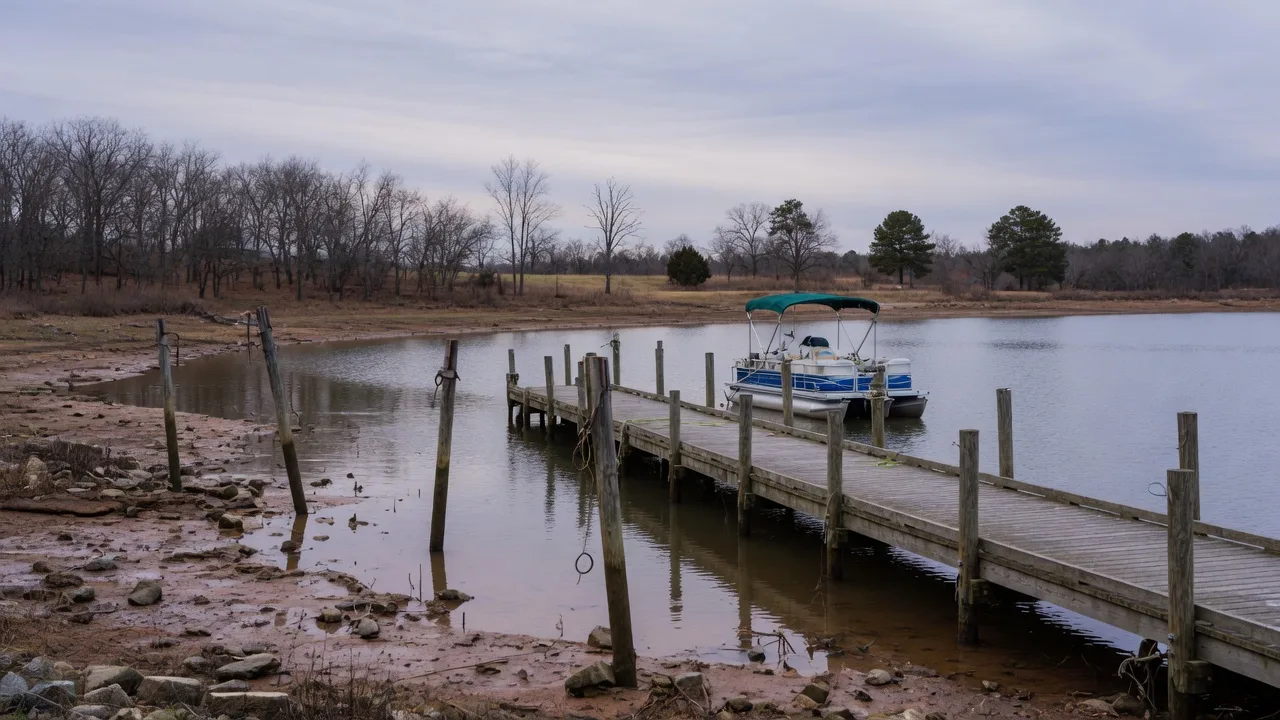
Lake Norman drops 3 to 5 feet every winter on purpose. Duke Energy owns the lake and the Cowans Ford Dam, and it draws the reservoir down between roughly November and April to create flood storage for winter and spring rains, to maintain the dam, and to match the lake to the season’s lower recreation demand. The drop is normal, it happens every year, and it is the first thing a relocating waterfront buyer should understand before falling in love with a cove.
What is the winter drawdown, and why does Lake Norman do it?
Lake Norman is not a natural lake. It is a reservoir, created in 1963 when Duke Energy dammed the Catawba River at Cowans Ford, and it is operated under a federal FERC license as part of the Catawba-Wateree hydroelectric system. That means the water level is a management tool, not a fact of nature. Duke Energy raises the lake for summer recreation and lowers it for winter flood control, every year, on a published seasonal schedule.
Full pond is 100 feet on Duke Energy’s gauge, which equals 760 feet above sea level. In the warmer months, roughly May 1 through October 1, Duke targets about 98% of full pond, around 98 feet on the gauge. In the winter months, November through April, the target drops to roughly 94 to 96 feet, which is 3 to 5 feet below full pond. The Lake Norman Marine Commission puts the normal operating range even wider, noting levels can vary as much as 8 feet in a normal year, with the lake generally drawn down in fall and winter.
If you are moving here from a place with natural lakes, this is the biggest mental shift. A natural lake stays roughly the same height all year. Lake Norman breathes, and the exhalation happens right when the weather turns cold.
How much does Lake Norman actually drop in winter?
Duke Energy reports lake levels on a relative gauge where 100.0 feet is full pond, the top of the flood gates at Cowans Ford Dam. That 100-foot mark equals 760 feet above mean sea level, the licensed normal pool. The seasonal targets below come from Duke Energy’s published operating plan and the Lake Norman Marine Commission’s navigation guidance.
| Season | Duke Gauge Target | Elevation (MSL) | Typical Drop Below Full Pond | Source & Date |
|---|---|---|---|---|
| Full pond (normal pool) | 100.0 ft | 760 ft | 0 ft | Duke Energy, Dam & Lake Level Basics; CMUD Drought Management Plan |
| Summer (May 1 to Oct 1) | ~98.0 ft | ~758 ft | ~2 ft | Duke Energy seasonal operating plan, 2026 |
| Winter (Nov to April) | ~94 to 96 ft | ~754 to 756 ft | ~3 to 5 ft | Duke Energy seasonal operating plan, 2026 |
| Normal operating range | up to ~8 ft of variation | n/a | n/a | Lake Norman Marine Commission, Navigation |
| Maximum licensed drawdown | 15 ft from normal pool | down to ~745 ft | up to 15 ft | CMUD Drought Management Plan (NC DEQ files) |
Full pond (normal pool)
100.0 ft gauge = 760 ft MSL
Duke Energy, Dam & Lake Level Basics; CMUD Drought Management Plan.
Summer target
May 1 to Oct 1
~98.0 ft gauge, ~758 ft MSL. Duke Energy seasonal operating plan, 2026.
Winter target
Nov to April
~94 to 96 ft gauge, ~754 to 756 ft MSL. Duke Energy seasonal operating plan, 2026.
Normal operating range
Lake Norman Marine Commission, Navigation. Levels can vary this much in a normal year.
Maximum licensed drawdown
CMUD Drought Management Plan (NC DEQ files). Down to roughly 745 ft MSL in extreme conditions.
Rainfall decides whether the lake meets its target
The seasonal targets are targets, not guarantees. After a dry stretch in the summer of 2026, Lake Norman was reading around 95 feet on the gauge in early August, roughly 3.5 feet below the seasonal target, well before the normal winter drawdown began. Source: Cornelius Today, Aug. 6, 2026. A wet fall can bring the lake back up quickly; a dry one can leave it lower than the winter target all season.
Why does Duke Energy draw the lake down every winter?
Three reasons, in order of importance. The first is flood control, and it is the whole point of the reservoir. Winter and early spring bring the heaviest rain and the mountain snowmelt that flows down the Catawba River, and the communities below Cowans Ford Dam need somewhere for that water to go. By holding the lake a few feet low through the winter, Duke Energy creates empty storage that catches runoff and protects downstream towns from flooding. Lake Norman Publications notes rainfall is only one factor in the level you see; the operating plan is the other.
The second reason is maintenance. A lower lake exposes the dam face, the intake structures, and the hydroelectric equipment for inspection and repair, work that is far harder and more expensive at full pool. The third reason is simple seasonality: almost nobody is boating in January, so the winter is the cheapest time to hold the lake low. Come May 1, Duke raises it back toward the summer target for the recreation season.
None of this is a malfunction. A relocator who sees the lake low in February and assumes the water is "gone" or the lake is dying is reading a working reservoir at its working level. The Dock and Shoreline Guide explains the related rule that matters even more: your property line ends at the 760-foot full pond line, and everything below it belongs to Duke Energy.
What does the drawdown mean for your dock and boat lift?
This is where the winter drop stops being trivia and starts being a five-figure lesson. In shallow coves and along shallow shoreline points, a 3 to 5 foot drop exposes mud flats, stumps, and rocks that were safely underwater in July. A dock that floated a pontoon boat all summer can sit too shallow to hold it in February, and in the worst coves the dock itself touches bottom.
Boat lifts are the classic victim. Floating lifts rise and fall with the water, which sounds convenient until the lake drops far enough that the lift bottoms out, tilts, or twists with the winter wind. Cable lifts mounted to stationary pilings stay put at any level, which is why local dock builders like Southshore Docks and Repairs recommend them for Lake Norman’s fluctuating levels. Lift motors and electronics also need winterizing against freezing, and every winter brings docks that fail, lifts that twist, covers that collapse, and boats that work loose and drift. Source: Details Matter NC, Nov. 28, 2025.
The rule for buyers is blunt: evaluate a dock at the winter target, never at summer full pond. If a listing is shown to you in June with a boat floating at the end of the dock, ask what that same spot looks like at 95 feet on the gauge. The dock cost guide breaks down what replacing or repairing that infrastructure actually runs.
Is it safe to boat in Lake Norman at low water?
Yes, with a change of habits. The Lake Norman Marine Commission warns boaters every winter that the drawdown exposes rocks, stumps, humps, and sandbars that are safely submerged in summer, and that some boat ramps become too shallow to launch. The main channel stays deeper and more consistent, so it is the safe place to run at low water; the danger concentrates in coves, shoreline approaches, and shortcuts you could take in July.
For a relocating boater, the practical translation is simple. Learn the main channel before you learn the shortcuts. Do not assume a ramp you used in October will float your boat in February. And if you are shopping for a slip or a community dock, the Water Access Without Waterfront guide lists the marinas and deeded-slip communities where depth is maintained rather than left to the season. The boating rules guide covers the no-wake and safety rules that matter at any water level.
What should a relocating buyer check before buying waterfront in Lake Norman?
The winter drawdown is the cheapest due diligence tool in real estate, and almost nobody uses it. Here is the checklist I walk every out-of-state waterfront buyer through before they write an offer.
- See the property at low water. Visit between December and March, when the lake is at its seasonal low, and stand at the waterline. The view of mud flats, stumps, and shallow approaches you get in February is the honest version of that cove.
- Check depth at the 760 line. At full pond, if the water at your property line is too shallow for a boat to float, Duke Energy can deny a dock permit. Many coves that look navigable at summer levels are mud flats at winter levels.
- Ask for the survey with the 760 line drawn. Your deeded property ends at the 760-foot full pond line. The distance between your house and that line decides your buildable area, your setbacks, and your dock potential.
- Know the dockable vs. non-dockable difference. A dockable lot is worth a premium because the supply is fixed; a non-dockable lot is a different asset entirely. The waterfront premium guide quantifies the gap.
The full permitting picture, including what triggers a Duke Energy license review and the 50-foot buffer, lives in the Dock and Shoreline Guide. And remember the county layer on top of all of it: the same waterfront home carries a very different tax bill on the Catawba side than the Mecklenburg side, which the Four County Breakdown lays out with the calculator.
Common questions about Lake Norman water levels
Why is Lake Norman so low in winter?
Duke Energy draws the reservoir down between roughly November and April to create flood storage for winter and spring rains and mountain snowmelt, to maintain the dam, and to match the season’s lower recreation demand. It is a scheduled, normal operation, not a problem. Sources: Duke Energy seasonal operating plan; Lake Norman Marine Commission.
How much does Lake Norman drop in winter?
Typically 3 to 5 feet below full pond, from a summer target of about 98 feet on Duke’s gauge down to a winter target of about 94 to 96 feet (roughly 754 to 756 feet above sea level). The normal operating range can reach about 8 feet of variation, and the maximum licensed drawdown is 15 feet. Sources: Duke Energy; Lake Norman Marine Commission; CMUD Drought Management Plan.
When does Lake Norman start dropping, and when does it come back up?
The drawdown runs roughly November through April, and Duke Energy targets the higher summer level starting around May 1. Rainfall matters: a dry stretch can push the lake below target early, as it did in August 2026, while a wet fall can refill it quickly. Source: Duke Energy seasonal operating plan; Cornelius Today, Aug. 6, 2026.
Will the winter drawdown damage my dock or boat lift?
It can. Docks in shallow coves can sit too shallow to hold a boat, floating lifts can bottom out or twist at low water, and lift motors need winterizing against freezing. Cable lifts on stationary pilings are the recommended choice for Lake Norman’s fluctuating levels. Sources: Southshore Docks and Repairs; Details Matter NC, Nov. 28, 2025.
Can you still boat in Lake Norman at low water?
Yes, but the winter drawdown exposes rocks, stumps, humps, and sandbars that are submerged in summer, and some ramps become too shallow to launch. The main channel stays deeper and is the safe route at low water. Source: Lake Norman Marine Commission, Navigation.
Can Lake Norman drop more than the normal winter target?
Yes. The licensed normal pool is 760 feet above sea level with a maximum drawdown of 15 feet, and drought conditions can push the lake well below the seasonal target. That is why waterfront buyers should evaluate depth at low water, not at summer full pond. Source: CMUD Drought Management Plan (NC DEQ files).
Buying waterfront? See the cove at winter level first.
I have watched too many out-of-state buyers fall for a June photo and close on a February problem. I will take you to the property at low water, pull the survey with the 760 line, and tell you honestly whether that dock will float a boat in January.
Planning a move to Lake Norman?
Whether you are three months out or three years out, the county, town, and community questions come first, before any house tour. Tell me where you are moving from and what you are looking for, and I will point you to the right starting point in Lake Norman.