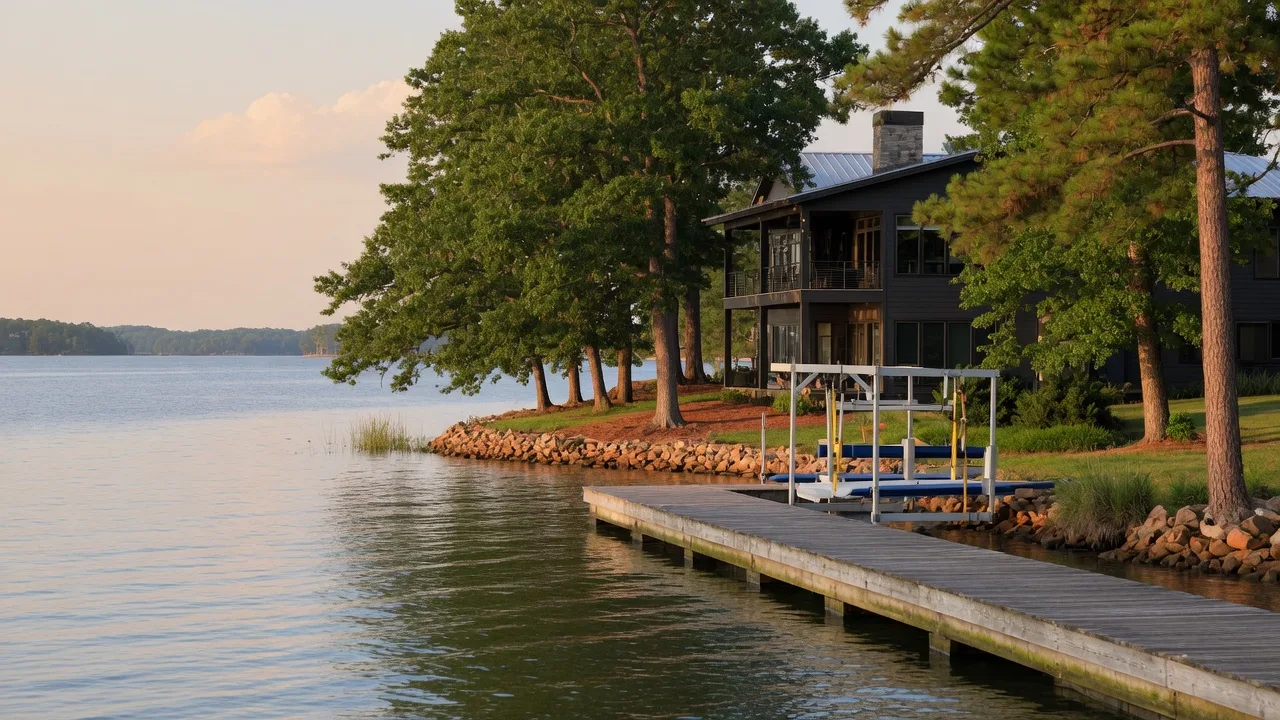
Flood Insurance & Protection
Do you need flood insurance in Lake Norman?
If you are buying a waterfront home in Lake Norman, the answer is almost certainly yes. Most lakefront properties sit in FEMA Flood Zone AE, the 100-year floodplain, where flood insurance is mandatory for any home with a federally backed mortgage. If you are buying off-water but near the shoreline, the answer depends on your specific elevation and flood zone designation. This guide covers everything you need to know about flood insurance in Lake Norman, including which zones apply, what coverage costs by county, and how FEMA's Risk Rating 2.0 changed the pricing structure in 2023.
Why flood insurance is a hidden cost relocating buyers miss
The single most expensive mistake relocating buyers make in Lake Norman is assuming their standard homeowners insurance covers flooding. It does not. Standard policies exclude rising water and surface flooding entirely. A separate flood insurance policy is the only way to protect your home from damage caused by heavy rain, storm surge, or shoreline overflow.
In Lake Norman, the risk is real. The lake is maintained by Duke Energy at a target elevation of 760 feet above sea level (full pond). During heavy rain events, water levels rise. Properties built at or near the 760 line are in the floodplain, and FEMA's flood maps place most waterfront homes in Zone AE, the Special Flood Hazard Area (SFHA). Over a 30-year mortgage, there is roughly a 26% chance of at least one flood event at the base flood level. Source: Cottage Real Estate, Lake Norman Water Levels.
The cost of flood insurance varies dramatically by property. Under FEMA's Risk Rating 2.0, which was fully phased in by April 2023, premiums are calculated individually based on distance to water, elevation, rebuild cost, and flood frequency rather than just the zone on a map. This means two waterfront homes on the same street can pay very different premiums. Source: Bridgeway Insurance, Flood Insurance Cornelius NC.
A note on the four counties: Flood insurance requirements and costs do not change at the county line in the way property taxes do. FEMA flood zones follow topography, not jurisdiction. However, your county's building elevation requirements and the specific elevation of your property relative to the lake determine your risk. The table below shows typical costs by area, but every property must be individually evaluated.
Which flood zone is your home in?
Lake Norman properties fall into three main FEMA flood zone categories. Your zone determines whether flood insurance is mandatory and roughly what it will cost under the National Flood Insurance Program (NFIP).
| FEMA Zone | Flood Risk | Insurance Required? | NFIP Est. Annual Cost | Typical Lake Norman Locations |
|---|---|---|---|---|
| AE | High (1% annual) | Yes, with mortgage | $1,200 - $2,400 | Most waterfront homes, properties within 50-100 ft of shoreline |
| X (Shaded) | Moderate (0.2% annual) | Not required | $400 - $700 | Off-water communities within ~1 mile of lake, some cove-adjacent lots |
| X (Unshaded) | Minimal | Not required | N/A (or optional low-cost) | Most inland properties, neighborhoods 1+ miles from shoreline |
Zone AE
High flood risk
Zone X (Shaded)
Moderate flood risk
Zone X (Unshaded)
Minimal flood risk
Source: Bridgeway Insurance, Flood Insurance Cornelius NC (2026), Flood Insurance Mooresville NC (2026), ValuePenguin, NC Flood Insurance Costs (2025). Rates are estimates under NFIP Risk Rating 2.0. Every property receives an individual rate.
NFIP versus private flood insurance: what is the difference?
Most Lake Norman homeowners start with NFIP coverage, but the NFIP caps building coverage at $250,000. For a waterfront home that costs $800,000 to rebuild, that leaves a significant gap. Private flood insurance fills it.
| Feature | NFIP | Private Flood Insurance |
|---|---|---|
| Max Building Coverage | $250,000 | Up to full replacement value (often $1M+) |
| Max Contents Coverage | $100,000 | Often higher limits available |
| Cost (AE Zone Est.) | $1,200 - $2,400/yr | $900 - $1,800/yr (often lower for same coverage) |
| Waiting Period | 30 days | 14-30 days (varies by carrier) |
| Replacement Cost | Actual cash value or replacement cost | Replacement cost standard |
| Loss of Use Coverage | Not available | Often included |
| Deductible Options | $1,000 - $10,000 | $500 - $10,000+ |
NFIP (National Flood Insurance Program)
- Max building coverage: $250,000
- Max contents coverage: $100,000
- Estimated cost (AE): $1,200 - $2,400/yr
- 30-day waiting period
- Caps apply. No loss of use coverage.
Private Flood Insurance
- Coverage up to full replacement value
- Often cheaper than NFIP for high-value homes
- 14-30 day waiting period
- Loss of use coverage often included
- Replacement cost coverage standard
Sources: ValuePenguin, NC Flood Insurance (2025), SavingsProof, Charlotte Flood Insurance (2026), Bridgeway Insurance (2026).
What does flood insurance actually cost in Lake Norman?
The table below shows estimated total annual insurance costs for a $500,000 waterfront home in each Lake Norman county. Flood insurance adds $1,200 to $2,400 per year on top of your homeowners premium, which itself has been rising sharply across North Carolina.
| Cost Component | Cornelius (Mecklenburg) | Mooresville (Iredell) | Denver (Lincoln) | Sherrills Ford (Catawba) |
|---|---|---|---|---|
| Homeowners Insurance (est.) | $2,951 | $2,951 | $2,951 | $2,951 |
| Flood Insurance (Zone AE, est.) | $1,200 - $2,400 | $1,200 - $2,400 | $1,200 - $2,400 | $1,200 - $2,400 |
| Waterfront Premium (15-35%) | $443 - $1,033 | $443 - $1,033 | $443 - $1,033 | $443 - $1,033 |
| Total Insurance (est. range) | $4,594 - $6,384 | $4,594 - $6,384 | $4,594 - $6,384 | $4,594 - $6,384 |
Total Annual Insurance: $4,594 - $6,384
For a $500K waterfront home in any county
Homeowners insurance based on NC statewide average baseline of ~$1,700 adjusted upward for lakefront properties. The NC Rate Bureau approved a 7.5% increase effective June 2025 and another 7.5% effective June 2026, a cumulative 15% increase statewide. Waterfront homes typically pay 15-35% more than comparable inland homes due to water damage exposure, dock replacement, and custom construction. Sources: All About Insurance, 2025 NC Rate Hike, Bridgeway Insurance, NC Homeowners Insurance (2026), OIANC, Cornelius Home Insurance.
How FEMA Risk Rating 2.0 changed flood insurance pricing
Before April 2023, NFIP rates were based primarily on which FEMA zone your property fell into. A home in Zone AE paid the same rate as every other home in Zone AE, regardless of elevation, proximity to water, or rebuild cost. Risk Rating 2.0 changed that entirely.
Under the new system, each property receives an individual "Full Risk Premium" calculated from four factors: distance to the nearest water source, flood frequency and type (riverine, pluvial, or coastal), property elevation relative to base flood elevation, and rebuilding cost. In Lake Norman, this means a waterfront home built at 761 feet elevation (one foot above the 760 full-pond line) pays less than a home at 760.2 feet, even if they are on the same street.
Key things to know about Risk Rating 2.0 in Lake Norman:
- Existing policyholders see annual increases capped at 18% per year until their premium reaches the full risk-based rate. This cap transfers to the new owner when the property is sold. Source: Aspyre Realty Group, Flood Insurance Updates 2026.
- Non-primary residences (second homes and investment properties) face a higher annual increase cap of 25% per year.
- Commercial properties also face the 25% annual glide path.
- A property that was previously mapped out of the floodplain but is later remapped into Zone AE will pay the full risk-based rate immediately with no glide path protection, unless the property owner purchases a newly available NFIP policy before the remapping is finalized.
What to ask before you buy a Lake Norman home
Before making an offer on any Lake Norman property, ask these questions to ensure you understand your flood insurance obligations and costs.
1. What is the FEMA flood zone designation?
Your lender will check this as part of the mortgage process, but you should know before you make an offer. Ask your real estate agent to pull the FEMA Flood Map Service Center data for the property address. If it is Zone AE, flood insurance is mandatory with a federally backed loan. If it is Zone X, it is optional but still worth considering for off-water properties within a mile of the shoreline.
2. What is the base flood elevation and the home's elevation?
The home's elevation relative to the base flood elevation (BFE) determines how much of the NFIP premium comes from the building rate versus the contents rate. A home built one foot above BFE pays significantly less than a home at BFE. Ask for the Elevation Certificate if one exists; it will show the exact relationship. If no Elevation Certificate is available, the NFIP will default to the highest possible rate for that zone, so obtaining one can reduce your premium.
3. Does the property have an existing flood policy with a glide path?
If the current owner has an NFIP policy that is still under the 18% annual glide path (meaning their premium has not yet reached the full Risk Rating 2.0 rate), that cap transfers to you when you buy. Ask the seller for their current NFIP policy declarations page and check the "Full Risk Premium" versus their current premium. The difference tells you how much room there is before rates reach the full level.
4. Should I get a private quote before committing to NFIP?
For higher-value waterfront homes (over $500K rebuild cost), private flood insurance is often cheaper than NFIP and offers higher coverage limits. Get quotes from both NFIP-approved agents and private carriers before closing. Some private policies offer coverage up to full replacement value with lower deductibles and include loss of use coverage that NFIP does not.
Does flood insurance cover your dock?
This is a critical question that surprises many waterfront buyers. Standard NFIP policies do cover detached structures like docks, but only under specific conditions, and the coverage is limited.
Under NFIP rules, a dock is considered an "other structure" and is eligible for coverage up to $20,000 under the building policy if it is attached to the main structure by a common foundation. For detached docks, coverage is limited to 10% of the building coverage limit, or $25,000, whichever is less. Private flood insurance policies often offer higher limits for dock structures specifically, which is worth evaluating if you have an expensive boat lift, dock, or pier.
Dock and shoreline structures also fall under Duke Energy's Shoreline Management Program rules. If a dock is damaged or destroyed, replacing it may require a new Duke Energy permit, and the new dock must meet current standards. This is separate from insurance coverage but directly affects the cost of recovery after a storm. See the full Dock and Shoreline Guide for details on Duke Energy regulations.
Frequently asked questions about Lake Norman flood insurance
Do I need flood insurance if I am not in a flood zone in Lake Norman?
Technically no, if you do not have a federally backed mortgage and your property is in Zone X. However, nearly 25% of all NFIP claims come from properties outside high-risk flood zones. For off-water Lake Norman homes within a mile of the shoreline, a Preferred Risk Policy costs only $400 to $700 per year and is worth the protection.
Does standard homeowners insurance cover flood damage in Lake Norman?
No. Standard homeowners policies exclude rising water and surface flooding. You need a separate flood insurance policy through the NFIP or a private carrier to cover water damage from lake overflow, heavy rain, or storm surge. This is the most common and expensive misconception relocating buyers bring to Lake Norman.
How much does flood insurance cost in Lake Norman?
For a waterfront home in Zone AE, the NFIP premium typically ranges from $1,200 to $2,400 per year under Risk Rating 2.0. Off-water homes in Zone X pay $400 to $700 per year. Private flood insurance can be cheaper, especially for higher-value homes. Every property receives an individual rate based on its distance to water, elevation, and rebuild cost.
Does my homeowners insurance cover my dock in Lake Norman?
Standard homeowners insurance may cover a dock under "other structures" coverage, but the limit is typically 10% of your dwelling coverage. Flood damage to a detached dock is not covered by standard homeowners insurance. NFIP covers docks up to $20,000 (attached) or $25,000 (detached, under contents coverage). Private flood insurance often offers better dock coverage. Always verify dock coverage with your agent before a storm.
Can I buy flood insurance right before a storm?
NFIP policies have a 30-day waiting period before coverage takes effect. Private carriers typically have a 14-to-30-day waiting period. You cannot buy flood insurance the day before a hurricane or heavy rain event and expect coverage. Purchase your policy well before storm season (which runs June through November in North Carolina).
Does flood insurance cover septic system and well damage in Lake Norman?
NFIP building coverage includes septic systems if they are part of the building's utility system and located on the same property. Well equipment may also be covered. However, coverage limits apply. Properties outside municipal water and sewer (common in Denver and Sherrills Ford) should verify what their policy covers for well and septic damage, as repair costs can be substantial.
Not sure what flood zone a property is in?
I pull FEMA flood data and Elevation Certificates for every waterfront listing I help clients evaluate. A 15-minute conversation can save you thousands in unexpected insurance costs. No pressure, just real answers from someone who has helped families buy and sell in Lake Norman for over 22 years.
Planning a move to Lake Norman?
Whether you are three months out or three years out, the county, town, and community questions come first, before any house tour. Tell me where you are moving from and what you are looking for, and I will point you to the right starting point in Lake Norman.